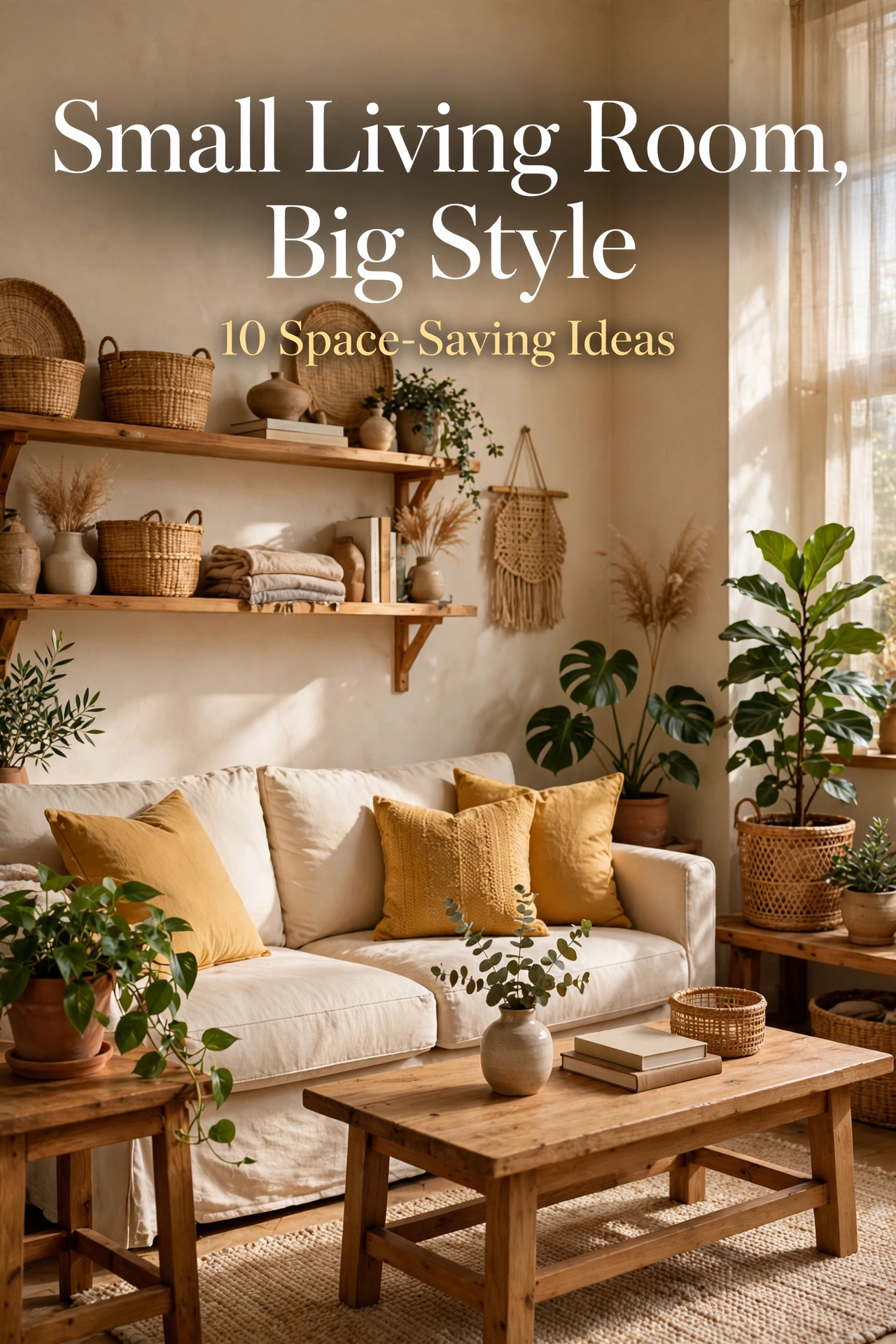
10 Small Living Room Ideas That Make Your Space Feel Twice as Big
A small living room doesn't have to feel cramped. With the right layout, colors, and a few clever tricks, even the tiniest space can feel open, airy, and twice its actual size. These ten small living room ideas are practical, budget-friendly, and proven to work in real homes.
1. Pull Furniture Away From the Walls
It feels counterintuitive, but floating your sofa even a few inches off the wall creates breathing room that makes the whole space feel larger. When every piece of furniture is shoved against the walls, the room reads as one tight box. Leaving a small gap behind the sofa or chairs creates depth and shadow, which tricks the eye into seeing more space. Even three to four inches makes a visible difference.
2. Stick to Light, Airy Colors
Light walls reflect more light, and more light always reads as more space. Soft whites, warm creams, pale grays, and gentle beiges open up a small living room instantly. That doesn't mean everything must be white — layer in color through pillows, throws, and art. But keeping the big surfaces (walls, sofa, rug) light creates an airy envelope that darker colors simply can't match.
3. Hang a Large Mirror Strategically
A well-placed mirror is the oldest small-space trick in the book because it genuinely works. Hang a large mirror opposite or adjacent to a window and it bounces natural light deep into the room while visually doubling the space. One oversized mirror beats a cluster of small ones — go as big as your wall and budget allow. A round mirror over the sofa or a tall leaning mirror in a corner both do the job beautifully.
4. Choose Furniture That Does Double Duty
In a small living room, every piece should earn its footprint. A storage ottoman works as a coffee table, extra seat, and hidden storage for blankets and remotes. Nesting side tables tuck away when you don't need them. A sleeper sofa or a daybed handles guests without demanding a guest room. Multi-functional pieces cut clutter, and less clutter always feels bigger.
5. Go Vertical With Storage
When floor space is scarce, the walls are your best friend. Tall, narrow bookcases draw the eye upward and make ceilings feel higher. Floating shelves display decor without eating floor space. A wall-mounted TV frees up the entire footprint a media console would occupy. Thinking vertically keeps the floor clear, and clear floors are the single biggest signal of spaciousness.
6. Use One Large Rug Instead of Several Small Ones
A tiny rug floating in the middle of the room chops the floor into pieces and makes everything feel smaller. One large rug that sits under the front legs of your sofa and chairs unifies the seating area into a single generous zone. It anchors the room and creates the impression of one continuous, comfortable space rather than scattered fragments.
7. Let the Light Pour In
Heavy drapes swallow light and visually shrink windows. Swap them for sheer curtains or simple linen panels hung high and wide — mount the rod close to the ceiling and extend it well past the window frame so the window looks bigger than it is. During the day, keep window treatments open. Natural light is free square footage for the eyes.
8. Pick Furniture With Visible Legs
Bulky furniture that sits flat on the floor looks heavy and hogs visual space. Sofas, chairs, and consoles with slim, visible legs let light and air pass underneath, which makes the floor look continuous and the room feel lighter. Mid-century-style pieces are perfect for this — they're practically designed for small living rooms.
9. Edit Ruthlessly and Corral the Clutter
Nothing shrinks a room faster than visual clutter. Be honest about what earns a spot in your small living room. Use baskets, lidded boxes, and closed storage to hide the everyday mess — remotes, chargers, toys, magazines. A tidy room with a few intentional decor pieces always feels larger than a room stuffed with stuff, no matter the actual square footage.
10. Keep a Consistent Color Palette
When every item in the room speaks the same color language, the eye glides across the space without stopping — and uninterrupted sightlines feel expansive. Pick two or three complementary tones and repeat them in the rug, pillows, throws, and art. High contrast between many unrelated colors chops a small room into visual pieces; a cohesive palette lets it breathe as one.
Shop This Look
Round Gold-Framed Wall Mirror (30-inch) — An oversized round mirror that bounces light and doubles visual space — [Affiliate link placeholder]
Linen Storage Ottoman — Works as a coffee table, extra seat, and hidden storage for blankets and remotes — [Affiliate link placeholder]
Sheer White Linen Curtain Panels (Set of 2) — Lightweight sheers that maximize daylight and make windows look larger — [Affiliate link placeholder]
Nesting Side Tables (Set of 2) — Tuck-away tables that expand your surface space only when you need it — [Affiliate link placeholder]
The Takeaway
Small living rooms reward smart choices, not big budgets. Start with light colors and one large mirror, float your furniture, and clear the clutter — you'll be amazed how much bigger the room feels. Pick one or two ideas from this list and try them this weekend, then come back and tell us which made the biggest difference in your space.
What color should I paint a small living room?
Soft whites, warm creams, and pale warm grays reflect the most light and make the room feel larger.
Does a mirror really make a room look bigger?
Yes — a large mirror opposite a window bounces light and visually doubles the space.
Should furniture touch the walls in a small living room?
No — floating pieces even a few inches off the wall creates depth that reads as more space.
What size rug is best for a small living room?
One large rug under the front legs of your seating; avoid small rugs that chop up the floor visually.
How do I make a small living room cozy but not cluttered?
Use closed storage for the mess, keep decor intentional, and repeat a tight 2–3 color palette.