You know the video by now: a bare, echoing box of a room — maybe 150 square feet, one window, one door — and thirty seconds later it is a whole home. A bed folds out of the wall, a desk appears by the window, a dining table flips down, shelves climb to the ceiling, and the same tiny footprint suddenly holds a bedroom, an office and a dining room. Extreme tiny-room makeovers are some of the most-watched home videos anywhere right now — the best-known studio series has passed 28 million views across its smallest-room episodes — and the format never gets old, because the problem never goes away: more of us live in small spaces than ever before.
The trick those makeovers share is not money. It is zoning. A tiny room fails when everything happens everywhere; it works when every square foot has one job, and furniture earns its floor space twice over. Here are ten ideas that turn a cramped studio into a room that feels twice its size.
1. Zone the room before you buy anything
Every successful tiny-room makeover starts with a floor plan, not a shopping list. Sketch the room and draw three zones: sleep, work, eat. Give each zone a clear edge — a rug, a bookshelf turned sideways, a change in lighting — so the eye reads three small rooms instead of one cluttered box. A free floor-plan app takes ten minutes and saves you from the classic mistake: buying a beautiful sofa that blocks the only sensible place for the bed.
2. Let the bed disappear by day
A bed eats 40 to 60 square feet around the clock, yet you only use it for seven of the twenty-four hours. A fold-down wall bed is the single biggest space win in a tiny room: by day it is a cabinet or a sofa back, by night it is a proper bed. Modern wall-bed kits start around $1,500 and fold up with the bedding still on.
3. Go up, not out, with storage
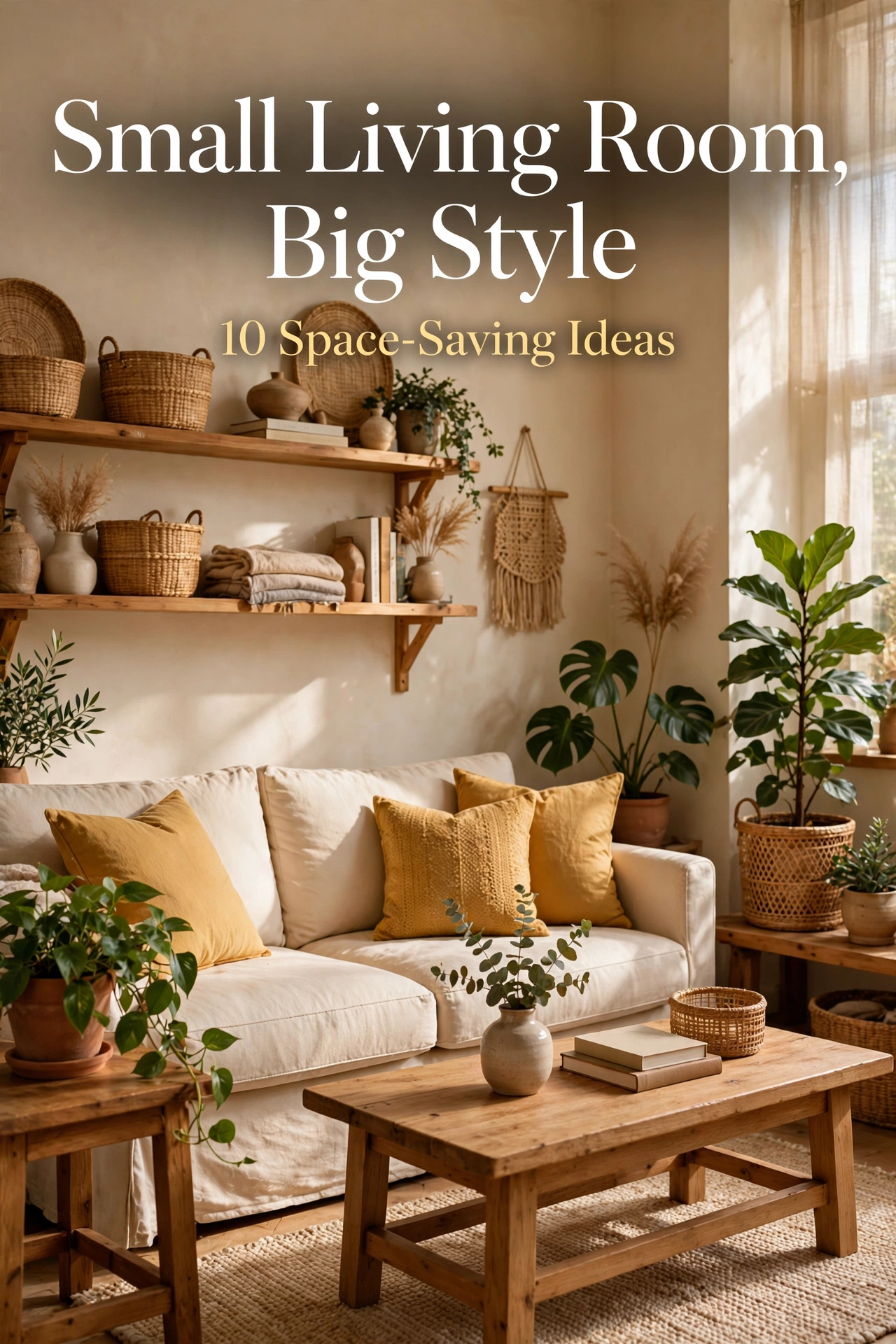
Floor space is the scarcest resource in a small room; wall space is free. Floor-to-ceiling shelving turns dead wall into a library, a pantry and a wardrobe in one, and it draws the eye upward, which makes the ceiling feel higher. Keep the shelves open and shallow — 25 to 30 centimetres deep is enough for books, baskets and folded clothes — and put the prettiest things at eye level and the boring things in woven baskets up high.
4. Use one big mirror, placed properly
A mirror is the cheapest square footage you will ever buy, but only if it reflects something worth seeing. Hang a tall mirror opposite the window, not opposite a wall, so it bounces daylight deep into the room and doubles the view. A full-length leaning mirror in a slim wood frame also works as a room divider’s best friend. One large mirror beats four small ones — small mirrors chop the wall up and make the room feel busier.
5. Pick furniture that does two jobs
In a 150-square-foot room, every piece must earn its keep twice. A storage ottoman is a seat, a coffee table and a linen cupboard. A drop-leaf table is a desk by day and a dinner table for two at night. A bookshelf with its back open works as a room divider that still lets light through.
6. Keep the palette pale and warm
Light colours reflect light, and in a small room that is everything. Warm white walls, pale wood floors and a soft neutral base make the walls recede; then add colour in small, deliberate doses — sage-green cushions, a honey-toned throw, one deep-green plant. The viral makeovers that feel calmest all share this formula: pale base, one accent colour, warm wood.
7. Light it in layers, not from one bulb
One ceiling bulb in the middle of a tiny room flattens everything and throws hard shadows into the corners. Layer it instead: a warm pendant or paper lantern for general glow, a small desk lamp for the work zone, and a string of fairy lights or a low shelf light for the evening. Warm white bulbs (2700K or lower) keep the room feeling cosy rather than clinical, and a dimmer — even a plug-in one — lets the same room be an office at noon and a living room at night.
8. Hide the clutter in matching baskets
Small rooms do not forgive visual noise. Open shelves full of mismatched boxes make the eye tired; the same shelves with matching woven baskets look intentional and calm. The rule is simple: if it is not beautiful, it goes in a basket, a drawer or a closed cabinet. Keep the surfaces you see every day — the desk, the dining table, the bedside — nearly empty, and the whole room will feel bigger than it is.
9. Borrow space from the window and the balcony
The window wall is the most valuable wall in a tiny room, so do not waste it on a tall wardrobe. Put the desk or the dining table by the window and keep the curtains sheer and floor-length — they soften the light, add height, and move gently, which makes the room feel alive. If you have a balcony, treat it as a room, not a storage cupboard: a fold-down table and two chairs add 40 to 80 square feet of usable space for most of the year.
10. Finish with plants at three heights
Every great tiny-room reveal ends the same way: with green. One tall plant in a floor basket, one trailing plant on a high shelf, and one small plant on the desk or dining table — three heights, three textures, and suddenly the room breathes. Plants soften hard edges, fill dead corners without using floor space, and give the eye somewhere restful to land.
Getting the look without overspending
The budget version of this makeover is zoning, paint and baskets. A free floor plan, a tin of warm-white paint, matching storage baskets and one tall mirror will change the feel of the room before you spend on furniture. Spend where it shows: the piece you sit on every day and the bed you sleep in. Buy the shelves, stools and table styling secondhand — in a small room, a good layout matters far more than a designer label.
The takeaway
A tiny room is not a problem to apologise for; it is a design puzzle with a very satisfying answer. Zone it first, let the bed disappear, build upward, mirror the window, and make every piece of furniture do two jobs. Do it in that order and your 150 square feet will hold a bedroom, an office and a dining room — and feel like a home, not a storage unit. Start with the floor plan this weekend.
Shop this look
Get the tiny-room transformation look with these easy finds:
- Wall-mounted fold-down Murphy bed
- Full-length leaning mirror with wood frame
- Wall-mounted drop-leaf folding table
- Woven storage baskets, set of 3